


Gelatin-Dairy Products
• Better sensory taste, delicacy, texture, and flavor
• Soft, shiny, foam texture
• Stable molding with more slicing properties
• Smooth taste
Additional information
Weight: 25 kg
Dimensions: 90 × 45 × 10 cm
Key word:
Sda Biotechnology
Download:

Gelatin’s Application In Dairy Products
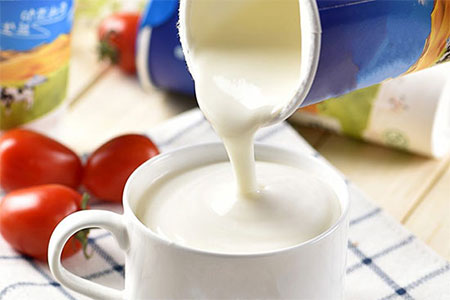
Dairy products and dairy beverages have attractive appearance, flavor, and texture to consumers, which is a primary goal for dairy manufacturers worldwide. Our gelatin offers key advantages in various dairy product applications, helping achieve this goal.
Consumption of gelatin helps prevent dehydration shrinkage, improve foaming, and stabilize the porous structure. Adding gelatin in moderation creates an irresistible creamy texture for dairy enthusiasts.
Edible gelatin in dairy products mainly prevents whey precipitation, protects casein, and stabilizes foam, achieving the following effects: reduced sugar and fat, increased thickness, stabilized protein system, improved quality, and optimized cost.
1.Delicious Yogurt
Dehydration shrinkage is a well-known issue in yogurt and other dairy products. The chemical or physical effects that occur during the bi-directional storage process can potentially impair the quality of the product. In yogurt, the result is whey separation from the yogurt curd. Gelatin, by lowering surface tension and relying on the binding power of water, can emulsify and stabilize the mixture, preventing dehydration and shrinkage, and ensuring that the final product remains appealing throughout the storage period.
Gelatin finds wide application in yogurt production, primarily as a stabilizer. It can help low-fat yogurt achieve a texture similar to yogurt with higher cream content, enhancing its acceptability. In yogurt products, gelatin molecules form a weak gel network structure that can prevent whey leakage and separation. Gelatin exhibits stability with high strength and a high melting point, making it suitable for individual use in yogurt products.
2.Diluted Cream
Cream is a mixture consisting of ingredients such as milk fat, water, and proteins.
When gelatin powder is added to cream, it can combine with water molecules to form a gel-like substance, making the cream more dense. Additionally, due to the gelatin’s gelling properties, it can stabilize the bubbles in the cream, preventing them from bursting during mixing or heating. This makes the cream more stable, allowing it to maintain its volume and flavor for a longer period. In the preparation of cakes or desserts, processed cream often needs to be maintained in a stable state for ease of mixing, spreading, and decorating, and gelatin plays an important role in achieving this.
3.Soft Cheese
Gelatin can combine with water in the application of cheese and the production process of cream cheese to stabilize and prevent whey precipitation. Meanwhile, due to the melting point of gelatin being close to human body temperature, products containing gelatin have a smooth and delicate taste, and a satisfying flavor.
Soft cheese products are particularly capable of fully utilizing the water binding and thickening properties of gelatin.
The ingredients of gelatin also help prevent dehydration, shrinkage, and improve stability.
USAGE:
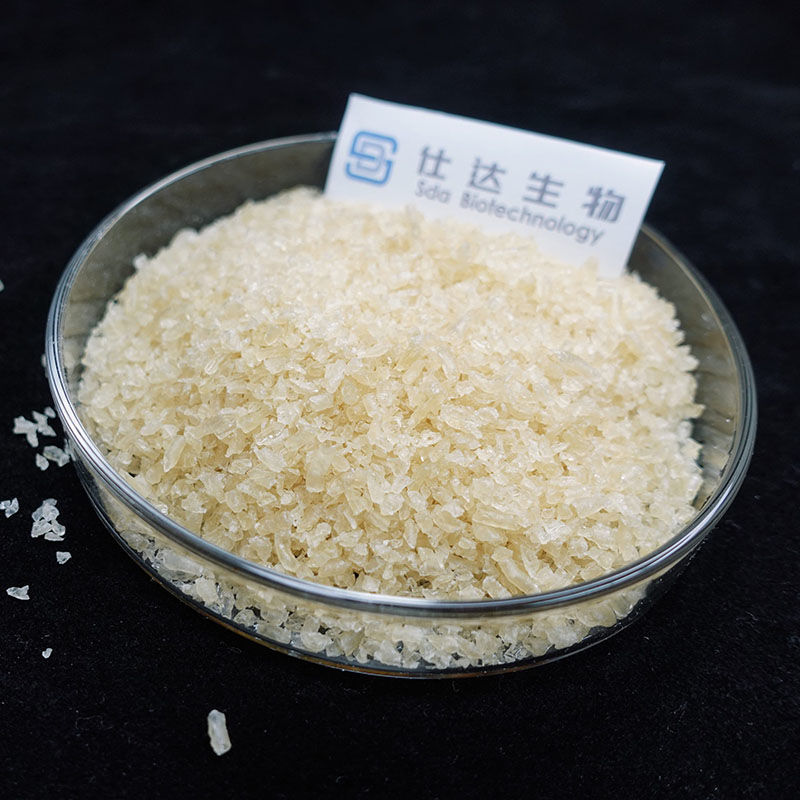
The gelatin particles and water, according to 1:10, that is 1 part of gelatin powder and 10 parts of cold water soak, (the proportion of adding water can be adjusted according to the production process) 40-60 minutes, after the expansion of water absorption and then indirect heating dissolved, the sol can not be directly heated, the sol temperature is controlled below 80℃, completely heated dissolved into the glue state can be added and used.
The Optional Particle Size Is:
| 0.3mm 60 mesh fine grinding | 0.5mm 35 mesh fine grinding | 0.8mm 20 mesh fine grinding | 3mm 8 mesh fine grinding |
GB6783-2013 & Contract Requirements
| Moisture | % | ≤14.0 | 10.0 |
| Gel Strength | Bloom | 6.67% 10℃ | 150-180 |
| Viscosity | °E | 15%,40℃ | 5.0-9.0 |
| mPa.s | 6.67%,60℃ | 3.0-4.0 | |
| Light transmittanceratio | % | Wavelength450nm≥30 Wavelength620nm≥50 |
Wavelength450nm:81 Wavelength620nm:92 |
| Chromium(in Cr) | mg/kg | ≤2.0 | 0.5 |
| Total Bacterial Count | CFU/g | ≤10000 | <100 |
Recommended Products
Sample Application
Attention: Please leave your contact information, and our professionals will contact you as soon as possible!